Navigating the current pandemic requires that young people acquire an increasingly complex set of skills, such as understanding statistical data, evaluating the credibility and truthfulness of health information, analyzing the risks and benefits of a particular treatment or vaccine, and interpreting test results. An essential skill in 2021 is health media literacy.
resources
Use some Common Sense during #MediaLiteracyWk
Common Sense Media is a non-profit, non partisan organization that has been around since 2003. Common Sense caters primarily to three different constituencies: Common Sense Media (parents), Common Sense Media Education (teachers), and Common Sense Action (advocates). Its organizational mission is to “provide education and advocacy to families to promote safe technology and media for children.” While “safe use” can sometimes allude to protectionism rather than empowerment, the Common Sense web site tells otherwise (in both Spanish and English).
We at PLAY think that if there is just one new resource families can add to their media literacy toolkit to commemorate National Media Literacy Week (Oct 21-25, 2019), it should be Common Sense Media. Here are just a few reasons:

Nutrition Education: The Political Version
The Atlantic offers an excellent conversation-starter video (5 minutes) about the myths of nutrition education that have been perpetuated throughout public schooling for decades. A food media literate person investigates the Food Pyramid with such questions as: “Whose interests are served?” “What is left out?” “Whose voices are excluded?” and “At what cost? And to whom?” [click title to read more]
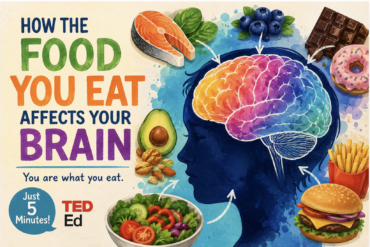
Food for thought . . . literally
If you have just 5 minutes this summer, watching this video by TED-ucator Mia Nacamulli s time well spent. “How the Food You Eat Affects Your Brain” is brilliantly animated and incisive in its information about that old adage, “you are what you eat.” The short video illustrates the direct and long-lasting effect of food on the most powerful organ in your body: your brain.
A Journey to Media Literacy
A big digital knuckle bump to the European Association for Viewers’ Interests (EAVI) for creating a Ning community to magnify the principles of media literacy, especially to…
Rethinking Schooling
Sir Ken Robinson is one of my favorite thinkers and speakers. The video “Changing Educational Paradigms” is a must-see for anyone interested in rethinking the…
10 Steps to Media and Technology Literacy
I was recently reminded of this workshop I facilitated from June 2011 and thought it was worth re-posting. Enjoy.As part of the MSU Network for…
Using Technology to Differentiate Instruction
[download PDF] This highly idiosyncratic Top 10 list was my starting point for a 3-session professional development mini-course (Using Technology to Differentiate Instruction Among Gifted…
A Blueprint for Teaching Young Children in a Digital Age
The challenge of improving teacher preparation and ongoing learning led to the creation of the Digital Age Teacher Preparation Council, established by the Joan Ganz Cooney Center at Sesame…
A Teacher’s Guide to Media Literacy
Two of my favorite media literacy educators are NAMLE founding member Cyndy Scheibe and NAMLE founding president Faith Rogow. They have just co-authored a much-needed…