This is an excerpt of an article in which I was quoted. You can read the full article at the link below. By Dina El…
Healthy Teens Archive

Why we fall for fake health information – and how it spreads faster than facts
In today’s digital world, people routinely turn to the internet for health or medical information. In addition to actively searching online, they often come across health-related information on social media or receive it through emails or messages from family or friends. It can be tempting to share such messages with loved ones – often with the best of intentions.
Health Media Literacy is a 21st Century Essential Skill
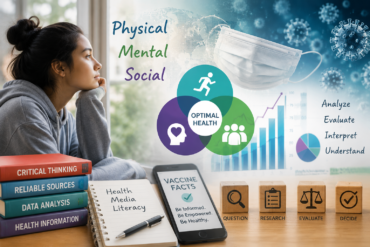
Optimal health is not just the absence of illness or disease; it is a state of complete physical, mental, and social well-being. I can’t think of anything more challenging right now, as the COVID-19 pandemic rages on. While we may be locked down temporarily, we must not lock ourselves in to the status quo of formalized schooling—including what constitutes core curriculum. Disparate times call for disparate measures, so to speak.
Health Media Literacy
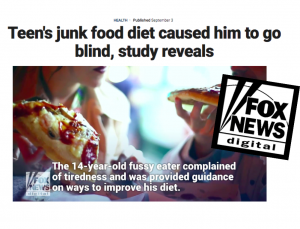
“Teen’s junk food diet caused boy to go blind.” “Even one diet soda a day may triple your risk for developing dementia.” “Dark chocolate may help prevent some forms of cancer.” These are just a few of the health news headlines (or click bait?) that we consume on a daily basis. But they rarely reflect the actual or nuanced research findings.
Exposing Astroturfing As Only John Oliver Can
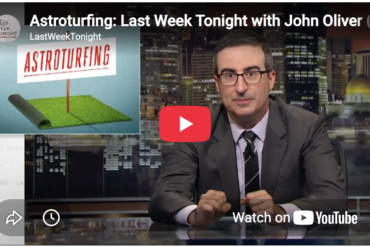
Astroturfing is the deceptive practice of presenting an orchestrated public relations or marketing campaign under the guise of unsolicited comments from members of the public. The term originated from the artificial grass astroturf applied to an artificial grass-roots campaign.
Astroturfing is rampant across industries that are inextricably connected to health: Food, beverages, climate, and safety, just to name a few. Oliver humorously calls out [click title to read more]
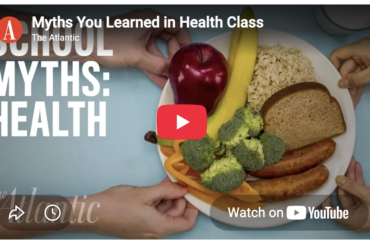
Nutrition Education: The Political Version
The Atlantic offers an excellent conversation-starter video (5 minutes) about the myths of nutrition education that have been perpetuated throughout public schooling for decades. A food media literate person investigates the Food Pyramid with such questions as: “Whose interests are served?” “What is left out?” “Whose voices are excluded?” and “At what cost? And to whom?” [click title to read more]
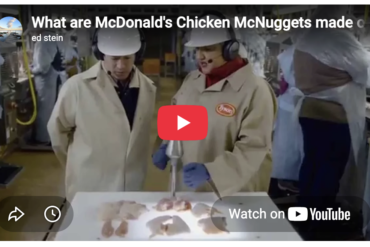
McNormalizing the McNugget
Food media literacy is essential to health. Achieving both requires not just unpacking the ingredients of foods but also decoding how the messages about them are packaged and delivered for ideological consumption. McDonald’s is masterful at (among other things) feeding public demand for “behind the scenes” information to dispel rumors about their food products while at the same time downplaying their potential hazards [click title to read more]

Celling Your Soul
To commemorate the 3rd Annual National Media Literacy Week (Nov 6-10) PLAY executive director and professor in the School of Communication and Media Vanessa Domine hosted a screening of Joni Siani’s documentary film Celling Your Soul (Bullfrog Films) in the new Presentation Hall in the School of Communication and Media at Montclair State University. The film takes viewers on a personal journey with a group of high school and college students who through a digital “cleanse” discover the power of authentic human connectivity. Does there exist an app or piece of technology that can replace the benefits of human connection? [click title to read more]
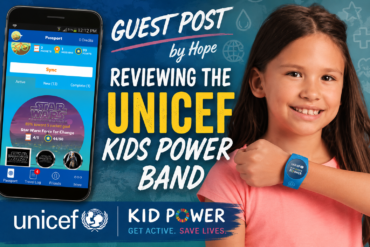
Feeding Kids—One Step at a Time
This is a guest post by Hope Green. She is 9-years-old and in 4th grade. Her hobbies are DIY/crafting, Suzuki piano, song-writing, and writing fiction. The UNICEF Kid Power Band is technically a “fit bit” for kids. It’s a pedometer that tracks your steps, tells the time, and turns exercise into “lifesaving nutrition that UNICEF delivers to severely malnourished children around the world.” [click title to read more]
Food Media Literacy Course
New course elective offered Fall 2017 semester in the School of Communication and Media at Montclair State University. Description: Food literacy requires much more than accruing facts or deciphering nutrition labels. Humans must actively engage across a wide variety of communication contexts and media platforms. Students in this course will develop and apply food media literacy skills to analyze, evaluate, create, and circulate knowledge about the histories, cultures, economies, and politics of food in the United States. Students will demonstrate their understanding of media languages, messages, audiences, and ownership through individualized and cross-platform media productions.