Prefer to Listen?
Autumn arrives early on my farmstead. I don’t mean calendar early. I mean, I spend enough time outside that sometime in late August I feel it coming. And it’s coming.
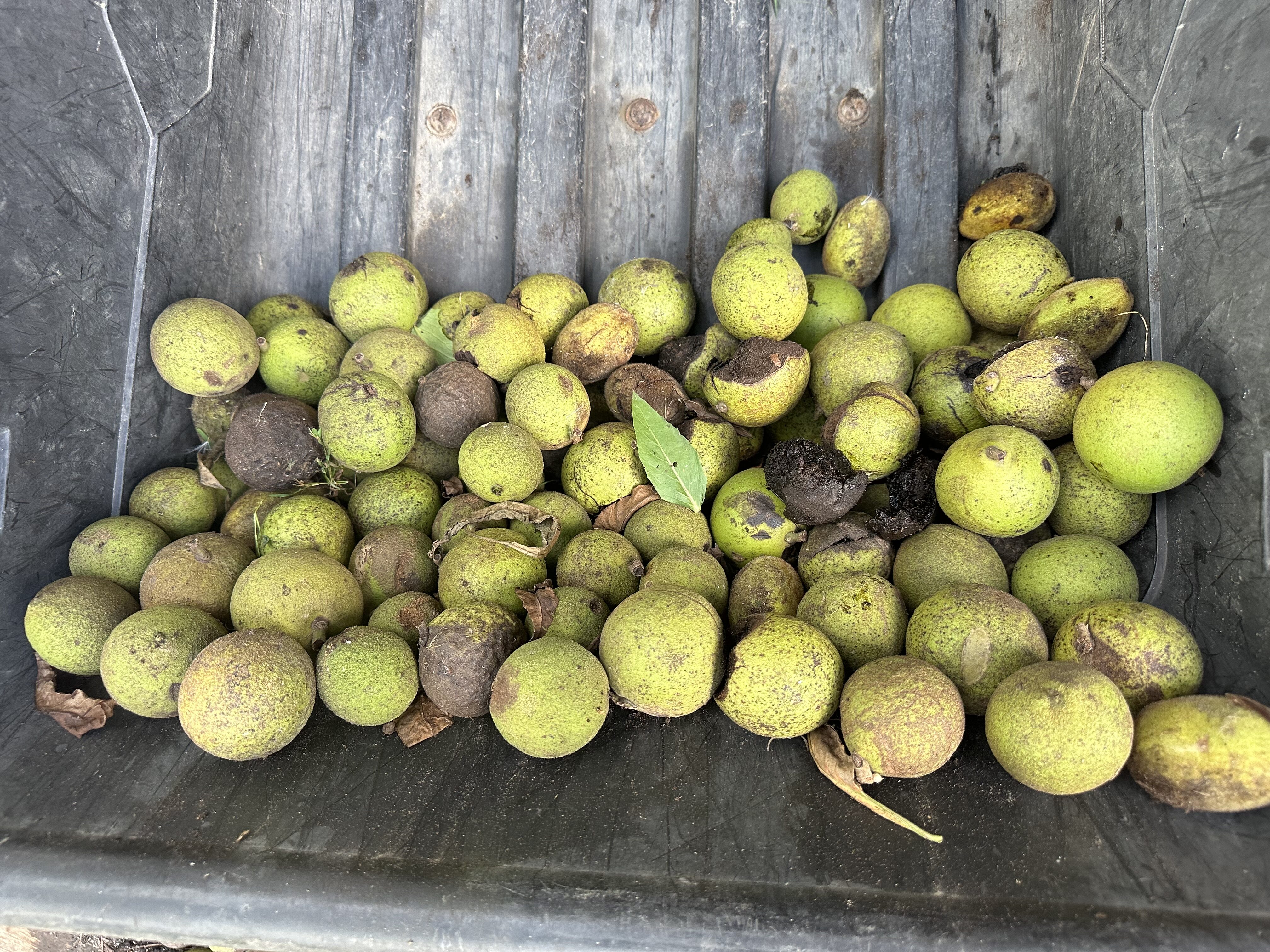
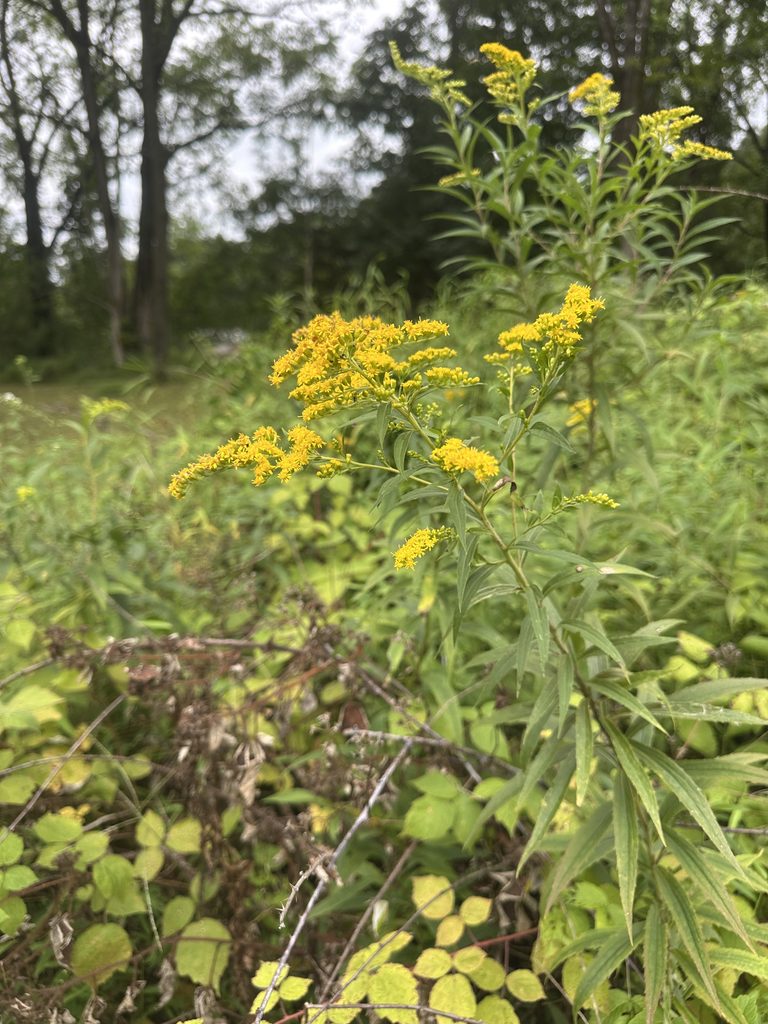
The light is the first thing I notice. By evening, the sun has shifted, throwing longer shadows across the back field. The frantic green growth of June and July has slowed. Goldenrod has erupted along the fence lines in great yellow plumes. The milkweed pods are swelling and beginning to dry (for me to harvest and save to plant next Spring for the Monarch caterpillars). Black walnuts hit the ground with heavy, startling thuds. The garden has acquired that nearly exhausted appearance of late summer: vines tangled over vines, leaves insect-chewed and sun-worn, tomatoes still coming but no longer with the excitement of July.
Even the air feels different. The thick, wet heat has given way to a cool morning that makes me stop on the way to the barn and inhale. The goats notice things I don’t. The chickens are up a little later in the morning. The insects sound different. Daylight is slipping away by minutes.
I used to dread this time of year. Now I love it.
There is something deeply satisfying about recognizing a season before it officially arrives. Autumn does not announce itself all at once. It accumulates. A cooler night here. A yellow leaf there. A seedpod where there was a flower. You notice, and then you notice again, until one morning you realize: Fall is here.
And then I walk into a big-box store and encounter an entire pallet of DUMPkin Spice Dude Wipes.
That’s right: Pumpkin-spice-scented flushable wipes. For men. Pumpkin spice has literally reached bottom.

How Did We Get Here?
I have nothing against pumpkin spice. Pumpkin pie is wonderful. Cinnamon, nutmeg, ginger, cloves, and allspice are wonderful. I have voluntarily consumed and even distributed my share of pumpkin-flavored baked goods and happily continue to do so. But you have to admit: something strange has happened to pumpkin spice.
It escaped the pie.
First came coffee. Then cereal, cookies, yogurt, granola bars, candles, soaps, air fresheners and dog treats. There has been Pumpkin Spice Spam. Pumpkin spice ramen. Pumpkin spice trash bags. Pumpkin spice dog shampoo. Pumpkin spice caviar. And yes, pumpkin spice deodorant, because apparently your armpits also need to know that autumn has arrived.
In 2022, The Guardian searched Amazon for “pumpkin spice” and got more than 138,000 results. And now we can add Dude Wipe to the list.
At some point in this migration, pumpkin spice stopped being a flavor. It became Fall™. As someone who studies media, I can’t help but ponder this cultural phenomenon.
Pumpkin spice works because it carries an astonishing amount of cultural information in a very small sensory package:
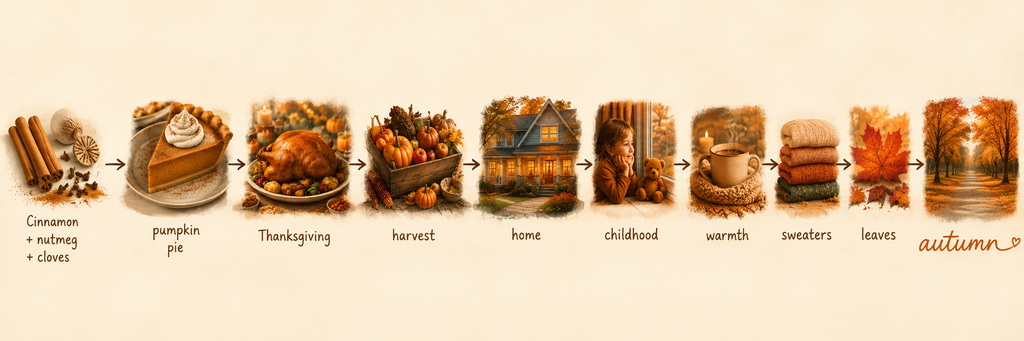
Marketers did not simply put pumpkin spice into everything. They put everything we associate with autumn into pumpkin spice. Once that happened, the sign became portable. It no longer needed pumpkin. Eventually it didn’t even need food. It only needed to make us feel fall.
When the Representation Arrives Before the Season
Media ecologists study environments and not merely individual messages. We study the larger systems of communication that shape what we perceive, what we value, and even what seems normal. From that perspective, pumpkin spice becomes surprisingly interesting.
Let’s compare: A season is slow, local, variable, embodied, and somewhat unpredictable. Commercial Pumpkin Spice Season is standardized, branded, nationally synchronized, photographable, hashtag-ready, and conveniently scheduled. More importantly, it increasingly arrives before autumn does. This reverses an ancient relationship.
For most of human history, environmental changes produced seasonal cultural practices. Temperatures dropped, crops ripened, daylight shortened, animals migrated, harvests arrived, and people developed foods, festivals, rituals, stories, and celebrations around those changes. Fast forward to present day when the representation can precede the phenomenon. The commercial environment first announces autumn. Then we begin performing it.
This doesn’t mean our seasonal traditions were somehow “pure” before Starbucks came along. Human beings have always mediated nature through culture. Pumpkin pie itself is a cultural artifact. But there is a difference between noticing autumn and developing rituals around it and encountering a commercial apparatus that tells us autumn has begun, and then conveniently provides the products with which to experience it.
The actual arrival of autumn now has to compete with the representation of autumn. And the representation has a much larger marketing budget.
My University Studied This. Of Course We Did.
This strange cultural phenomenon has actually been studied at my own university. In 2022, researchers at Montclair State University’s Center for Strategic Communication analyzed nearly 20,000 Twitter and Instagram posts mentioning pumpkin spice. They found that 55 percent were positive, only 8 percent negative, and the rest neutral. The researchers also noted nostalgia, sensory associations, seasonal scarcity, and the remarkable usefulness of pumpkin spice to brands.
They even identified “trendjacking”: companies attaching #pumpkinspice to products that have essentially nothing to do with pumpkin spice simply to insert themselves into the seasonal conversation (Enter Dumpkin Spice Dude Wipes).
The research is perfectly sensible for what it is. Public relations, advertising, and strategic communication need to understand trends, sentiment, engagement, branding, and consumer behavior. Those fields ask questions such as: How large is this trend? How do consumers feel about it? Which brands benefit?
Media literacy, however, needs to ask a different set of questions. Not simply “How many people are talking about pumpkin spice?” but “How did pumpkin spice become one of the primary ways millions of people know that autumn is here?” And perhaps more importantly: “What are we not noticing while we are noticing it?”
The Things That Don’t Have Marketing Departments
Media literacy has long taught people to examine selection and omission. A photograph includes what is inside the frame and excludes what is outside it. A news story selects some sources and not others. A filmmaker chooses what survives the edit. An advertisement foregrounds certain qualities while conveniently leaving others unmentioned. We teach people to ask: “What was selected? What was omitted?” But contemporary media environments suggest that we need to ask that question one step earlier.
Why is this the thing I am paying attention to in the first place?
Media environments don’t merely shape messages. They help construct the field of our attention. Algorithms recommend. Advertisements repeat. Notifications interrupt. Search engines rank. Influencers curate. Stores build enormous orange displays. And apparently Dude Wipes put a pumpkin in a toilet.
All of these things produce salience. They make something difficult not to notice. But salience is not the same thing as significance. Something can be extremely noticeable and relatively unimportant. Something else can matter enormously while making almost no effort to attract us. That distinction has been bothering me.
Outside my house, the milkweed pods are quietly changing. The daylight is shortening. Walnuts are dropping. Insects are disappearing and others are appearing. Plants are moving energy from flower to seed and root. None of these things sends me a notification. Goldenrod doesn’t trend. Milkweed has no marketing department. Autumn doesn’t have a product launch. To notice these things, I have to supply something myself: attention.
Maybe Media Literacy Needs To Teach Us to Look Away
Researchers studying our digital lives have already begun arguing that media literacy should include what some call critical ignoring—learning that in an environment overflowing with information, good judgment sometimes means refusing to give something our attention at all. Other scholars have proposed attentional literacy—deliberately cultivating the ability to direct and sustain attention rather than surrendering it automatically to digital environments.
I think we need both. But perhaps we also need something more. We need to practice noticing things that are important precisely because nobody is trying to make us notice them. I have started thinking about this as attentional discernment—the ability to distinguish what has been made salient from what we judge to be significant. This requires more than resisting distraction.
It requires asking:
- What has been made especially noticeable?
- Who or what made it noticeable?
- What has consequently faded into the background?
- What actually warrants my attention?
- (And then the hardest part) Can I redirect my attention there?
Media literacy, in other words, should teach us not only how to look critically at media. Sometimes it should teach us when to look away from them.
From Media Ecology to Media Permaculture
Permaculture begins with a simple principle: observe and interact. Pay attention to what the environment is already doing before deciding what it needs.
Pumpkin Spice Season does almost the opposite. Before the first cool morning or turning leaf, the commercial environment arrives to tell us what fall looks like, smells like, tastes like (and apparently what we should wipe ourselves with).
So perhaps a little media permaculture design is in order.
Keep in mind the goal is not to banish pumpkin spice or retreat from media. It is simply to reclaim some of the observation that marketing has begun doing for us. Notice the season before consuming its representation. And maybe leave a little room for autumn to surprise you.
A Media Permaculture Guide to Surviving Pumpkin Spice Season
So, as we enter that perilous annual interval between late August and the moment when pumpkin spice finally retreats in favor of peppermint mocha, here are a few ways to survive the season with your attention intact:
1. Check outside before accepting that fall has begun.
Before Starbucks, Target, or the deodorant aisle announces the change of seasons, step outside. Is the light different? Are nights cooler? What is flowering, ripening, migrating, dropping, or going to seed? Let the season provide some of its own evidence.
2. Conduct the Pumpkin Spice Test.
Whenever you encounter a pumpkin-spice product, ask: What does this have to do with pumpkins, spices, or autumn? Pie passes easily. Coffee gets grandfathered in. Candles require negotiation. Deodorant is on extremely shaky ground. Flushable wipes indicate that the system has failed.
3. When something is everywhere, ask who made it everywhere.
Ubiquity can feel like importance. It isn’t. Sometimes you’re witnessing a genuine cultural groundswell. Sometimes you’re witnessing a very successful marketing campaign. Usually it is some complicated combination of the two. Salience is not significance.
4. Look for the autumn nobody is selling.
Find one seasonal change that isn’t packaged, promoted, hashtagged, or pumpkin-spiced. A seedpod splitting. An earlier sunset. The first acorn hitting the roof. A flock of birds behaving differently. The smell of leaves beginning to decay. Practice noticing something that isn’t trying to be noticed.
5. Leave a little space for boredom.
Walk outside without putting something in your ears. Sit on the porch without scrolling. Drink something that is not simultaneously delivering content. An unoccupied moment isn’t necessarily a problem requiring technological intervention. Sometimes attention needs an empty space before it can discover where it wants to go.
6. By all means, eat the pumpkin pie.
Media literacy does not require becoming insufferable about other people’s pleasures. Drink the smoothie. Bake the bread. Light the candle. Put cinnamon in whatever you like. Just don’t let a flushable wipe tell you what season it is.
Meanwhile, Outside
I walk back toward the barn. The light is lower now, coming sideways through the trees and catching the top of the old barn. The thick August air has loosened its grip. Somewhere above me, a black walnut lets go. I hear a rustle, several soft knocks through the leaves, and finally the heavy thunk of the green hull hitting the ground. The goats are waiting at the fence (because the goats are always waiting at the fence).

Along another fence line, milkweed pods have grown fat and firm. Goldenrod is blazing yellow. Crickets have begun their evening chorus. The garden is still producing, but it has lost the frantic abundance of July.
None of this is particularly dramatic. That is precisely what I love about it. Nothing flashes or tells me to click. The milkweed has no marketing department. Goldenrod does not trend. Yet the entire landscape is communicating. Autumn isn’t quite here. But it is arriving everywhere. I don’t need anyone to announce it. I just need to pay attention.
There will still be pumpkin pie. Definitely chocolate-chunk pumpkin bread. Media literacy doesn’t require surrendering pleasure simply because someone has figured out how to market it. But I’ll pass on the deodorant. And definitely the wipes.
Because the best part of autumn may be the part nobody can package and sell back to me: the pleasure of discovering that it has arrived. Quietly. One walnut at a time.