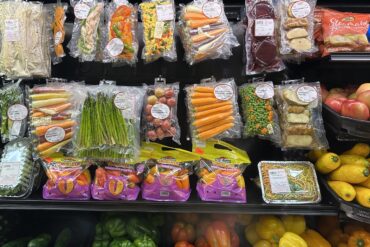
Prefer to listen? I took this photograph while browsing the aisles of a charming upscale market in northern New Jersey. Packages of asparagus, rainbow carrots,…
Tag: food media literacy

Health Media Literacy is a 21st Century Essential Skill
Optimal health is not just the absence of illness or disease; it is a state of complete physical, mental, and social well-being. I can’t think of anything more challenging right now, as the COVID-19 pandemic rages on. While we may be locked down temporarily, we must not lock ourselves in to the status quo of formalized schooling—including what constitutes core curriculum. Disparate times call for disparate measures, so to speak.
Nutrition Education: The Political Version
The Atlantic offers an excellent conversation-starter video (5 minutes) about the myths of nutrition education that have been perpetuated throughout public schooling for decades. A food media literate person investigates the Food Pyramid with such questions as: “Whose interests are served?” “What is left out?” “Whose voices are excluded?” and “At what cost? And to whom?” [click title to read more]
McNormalizing the McNugget
Food media literacy is essential to health. Achieving both requires not just unpacking the ingredients of foods but also decoding how the messages about them are packaged and delivered for ideological consumption. McDonald’s is masterful at (among other things) feeding public demand for “behind the scenes” information to dispel rumors about their food products while at the same time downplaying their potential hazards [click title to read more]
Food Media Literacy Course
New course elective offered Fall 2017 semester in the School of Communication and Media at Montclair State University. Description: Food literacy requires much more than accruing facts or deciphering nutrition labels. Humans must actively engage across a wide variety of communication contexts and media platforms. Students in this course will develop and apply food media literacy skills to analyze, evaluate, create, and circulate knowledge about the histories, cultures, economies, and politics of food in the United States. Students will demonstrate their understanding of media languages, messages, audiences, and ownership through individualized and cross-platform media productions.