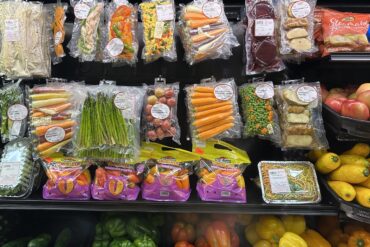
Prefer to listen? I took this photograph while browsing the aisles of a charming upscale market in northern New Jersey. Packages of asparagus, rainbow carrots,…
Tag: food literacy
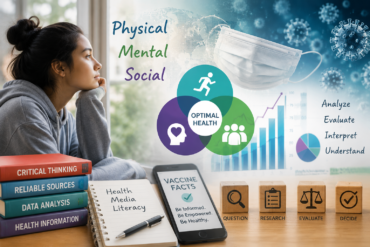
Health Media Literacy is a 21st Century Essential Skill
Optimal health is not just the absence of illness or disease; it is a state of complete physical, mental, and social well-being. I can’t think of anything more challenging right now, as the COVID-19 pandemic rages on. While we may be locked down temporarily, we must not lock ourselves in to the status quo of formalized schooling—including what constitutes core curriculum. Disparate times call for disparate measures, so to speak.
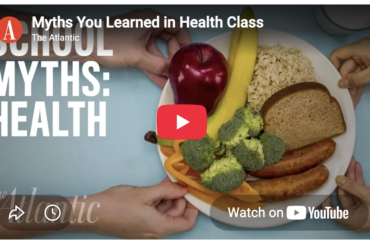
Nutrition Education: The Political Version
The Atlantic offers an excellent conversation-starter video (5 minutes) about the myths of nutrition education that have been perpetuated throughout public schooling for decades. A food media literate person investigates the Food Pyramid with such questions as: “Whose interests are served?” “What is left out?” “Whose voices are excluded?” and “At what cost? And to whom?” [click title to read more]
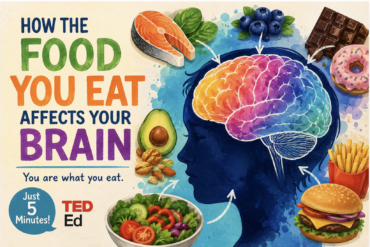
Food for thought . . . literally
If you have just 5 minutes this summer, watching this video by TED-ucator Mia Nacamulli s time well spent. “How the Food You Eat Affects Your Brain” is brilliantly animated and incisive in its information about that old adage, “you are what you eat.” The short video illustrates the direct and long-lasting effect of food on the most powerful organ in your body: your brain.
The Cookbook Project Teaches Food Literacy
 Adam Aronovitz and his wife, Alissa Bilfield, are co-founders of The Cookbook Project, a New Orleans-based non-profit with a mission to “empower youth to be catalysts for healthier communities through food literacy and cooking education.” They focus on health, sustainability, and community.
During the 2013-14 school year The Cookbook Project partnered with City Year and The Barbara Lynch Foundation to pilot a food literacy education program in the Boston Public Schools. One cohort of City Year staff were trained to implement a semester-long program with 3rd, 4th, and 5th grade students from the Blackstone Elementary School, located in Boston’s historic South End neighborhood. Based on the success of the pilot program, the Boston Food Literacy Initiative was launched during the 2014-15 school year. 55 City Year staff members were trained to run programs for 3rd, 4th, and 5th grade students in four Boston Public Schools. Through an innovative collaboration with The Barbara Lynch Foundation, the program is teaching youth about the connection between their food choices, the community, and the environment. Read more
Go ahead and bug me with The Good Stuff
Thank you, PBS Digital Studios, for reviving the 2013 (originally Google-funded) Internet program, “The Good Stuff,” which launched new episodes as of May 2015. The YouTube…
Small Step for California, Giant Leap for School Cafeterias
The Center for Ecoliteracy has left an unprecedented mark in the movement for green schooling. Based in Berkley, California, this non-profit organization is spearheading the…
Healthy Choices from the Ground Up
The National Farm to School Network (NFSN) has brought local foods, health education, and hands-on gardening to over 40,000 schools in the America. This empowering…
Starting a Food [Education] Revolution
Jamie Oliver’s Food Revolution aired on U.S. television between from March 2010 and June 2011. Its star was English celebrity chef and restaurateur Jamie Oliver…