Prefer to Listen?
I have a list. Actually, I have several lists, which is already part of the problem.
The goats need a more reliable shelter. The wood-chip bin needs a roof so I can turn it into a makeshift equipment shed. The barn needs organizing. Although organization is not really its most pressing problem. It has loose beams, water damage, and enough structural uncertainty that I need an engineer to tell me what is holding up what.
And my house isn’t much better.
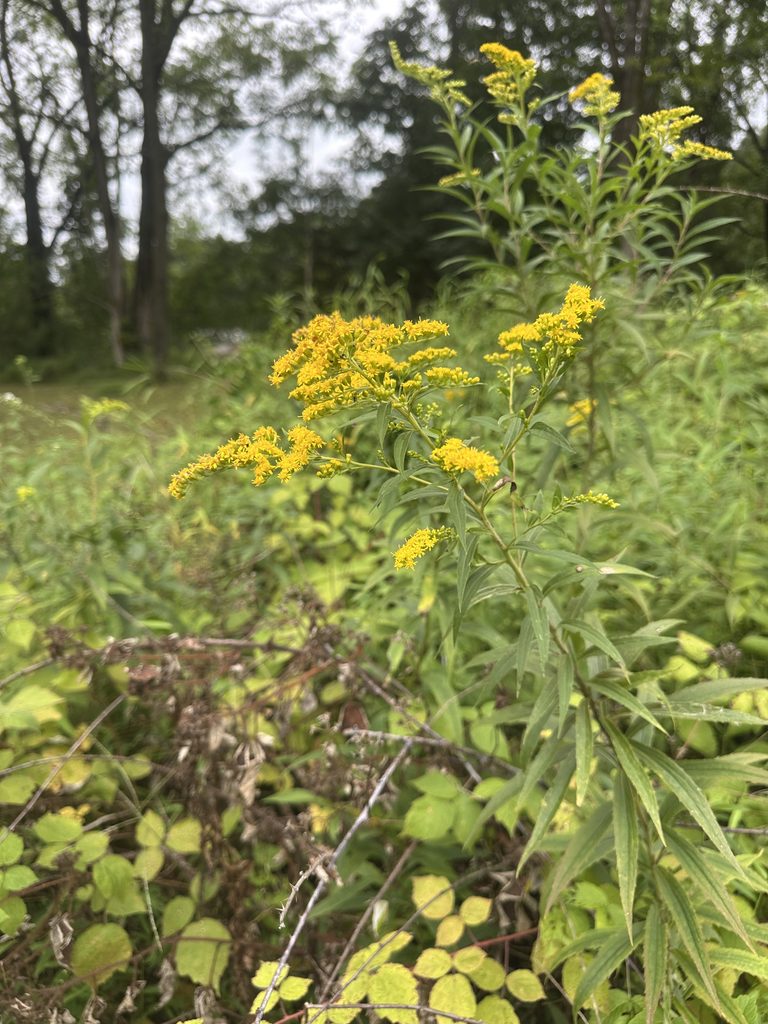
There are, in other words, plenty of things requiring my attention. So naturally, today I moved goldenrod.
It was one of those beautiful September days that feels briefly inexhaustible. The air had lost some of the oppressive heaviness of summer. The ground was workable. The sun was warm without making work miserable.
Autumn has not arrived yet, but the day had that quality September days sometimes acquire: an awareness that there are only so many days like this available for outside work.
Which should have sent me directly to the goat shelter. Instead, I took a shovel to the property line.
I have been trying to create a living boundary along the private gravel road. There isn’t much traffic, but what traffic there is belongs to the neighbors coming and going, with an unobstructed view into the chicken coops, the goat pens, and whatever project I happen to be working on. It is difficult to feel secluded when so much of the daily life of the farm is on display. I don’t need a fortress. I would just like the property to feel a little less like an exhibit.
I could put up a fence. Instead, I am planting one. This is considerably less efficient.
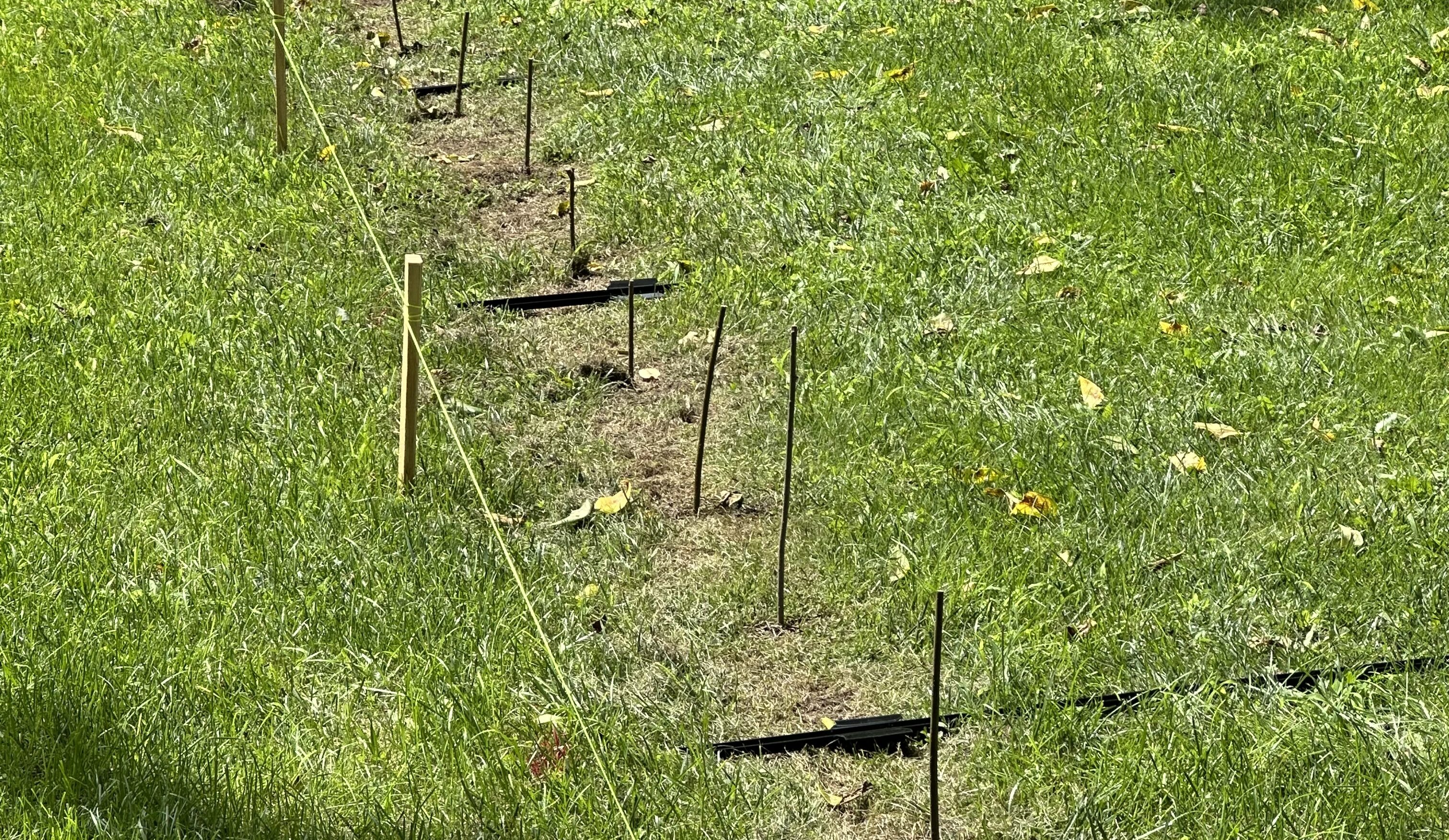
Along the property line I have been putting willow cuttings into the ground and moving plants already growing elsewhere on the farm: goldenrod, black-eyed Susans, milkweed, dried heads of purple coneflower—whatever seems likely to tolerate the conditions and contribute eventually to something resembling a hedge. Eventually is highly aspirational, I know.
At the moment, my “privacy screen” consists primarily of sticks, disturbed soil, and optimism. The goldenrod was growing abundantly in places where I didn’t particularly need goldenrod. I didn’t buy it. I didn’t plant it. I didn’t propagate it. It was already here. So I dug around the roots, lifted clumps from the ground, carried them to the perimeter, dug another hole, and put them back into the same property several hundred feet from where they had started.
There is something faintly absurd about spending an afternoon moving plants from one part of four acres to another. I was not adding anything to the landscape. I was just rearranging it.
Once I noticed that, I began noticing how much of what I was doing depended upon things that had arrived before my plan for them did. The goldenrod had grown because goldenrod grows here. The milkweed had made pods because milkweed had established itself here. The dead flower heads I scattered contained seeds produced by plants that had spent the summer doing exactly what they were supposed to do without consulting me. Even the willow cuttings contained a kind of proposition: put this piece of a living thing into sufficiently hospitable ground and perhaps it will decide to continue. Perhaps.

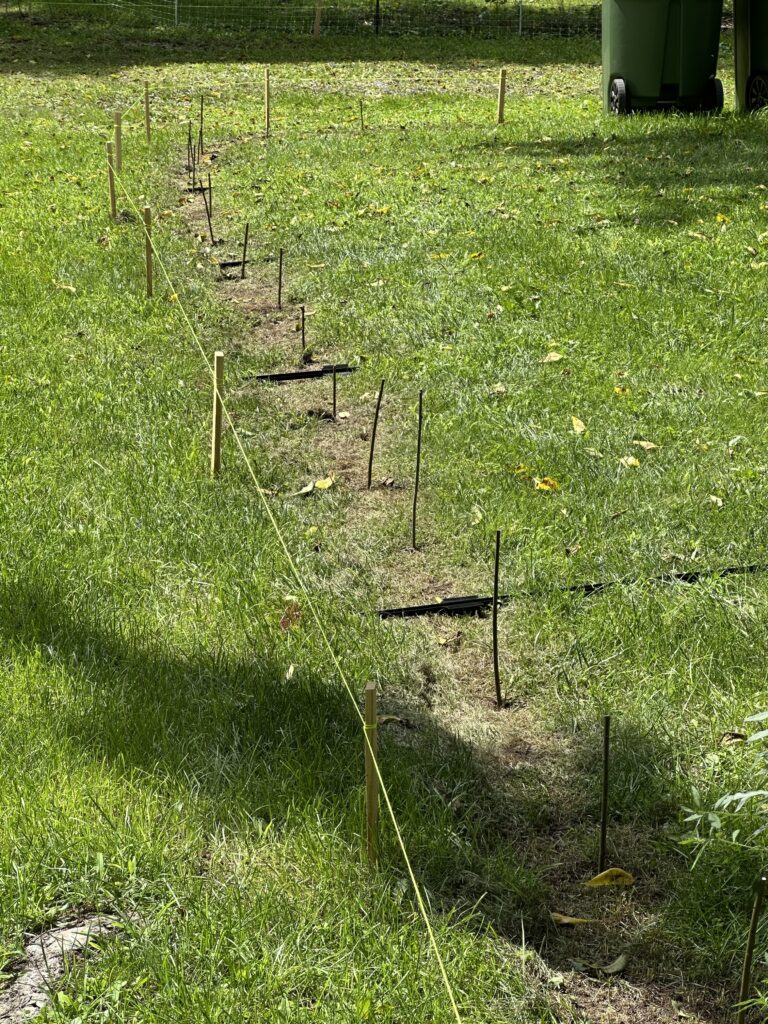
That is the difficulty with building a fence out of things that are alive. A conventional fence has the advantage of obedience: Set the posts. Attach the wire. Drive the last staple. The fence remains approximately where you put it. Plants are much less cooperative. Some of my willow cuttings will root. Some won’t. Goldenrod will spread beyond the places I have carefully selected for it. Milkweed will appear where I don’t remember scattering seed and fail to appear where I do. Birds will plant things I did not request. Deer will prune things I did not offer. The goats will eat any portion they can reach.
And yet I prefer this boundary. Partly because it costs almost nothing. Partly because I can make it largely from what is already growing here. But those explanations did not seem quite sufficient as I worked my way down the property line. I could see the barn from where I was working. It is about a hundred years old. It has loose beams, water damage, and enough problems that every contractor I have asked to look at it eventually arrives at some version of the same recommendation: Tear it down. Start over. Build something new.
But I don’t want a new barn. I want this barn to continue being a barn. Ideally, standing. I don’t think it will collapse this year, which is apparently the standard of structural integrity I am currently working with. The barn is not a problem I can solve by moving it several hundred feet to the left. It needs expertise. Some beams may need replacing. Water has to be redirected. I may eventually learn that portions of it cannot be saved.
But as I moved goldenrod with the barn sitting behind me, the two began to seem less unrelated than they had that morning. The easiest way to make the property line private would be to buy a barrier and install it. The easiest way to make the structural problems of the barn disappear would be to make the barn disappear. Both solutions begin with clearing away what is already there. I seem increasingly reluctant to begin there. Not because everything old should be preserved. Not because everything growing wild is valuable merely because it volunteered.
Sometimes the right answer is removal. But removal is a remarkably final answer to give before asking what else something might become. So I kept digging. And learning. I learned that goldenrod belongs to the genus Solidago, a name associated with the Latin to make whole, a reference to the plant’s long history of medicinal use (Apparently even the weeds are getting involved in this metaphor).
Except whole is not quite right. I was not making the property whole that afternoon. I wasn’t even making the property line private. Anyone driving past could still see me quite clearly, apparently spending an unreasonable amount of time planting weeds beside the road.
The goats still needed shelter. The wood-chip bin still needed a roof. The barn was still standing behind me with all of its questionable beams. Nothing urgent had disappeared from the list. But the property line was different. There were willow sticks where there had not been willow sticks. Goldenrod was settling into holes where there had been grass. Milkweed seeds were lying on soil where they might spend the winter and perhaps become milkweed next year. That is not nothing.
I think I am accustomed to valuing work by how completely it solves a problem. A roof either keeps the rain out or it doesn’t. A shelter either protects the goats or it doesn’t. A broken beam eventually requires an answer considerably more definite than optimism. But not every worthwhile use of a day produces a solved problem. Sometimes the work is to alter the conditions under which something might happen later. Plant the willow. Move the goldenrod. Scatter the seed. Then wait.
That requires a different relationship with the result. I can choose the location. I can dig the hole. I can settle the roots, replace the soil, and give them water. I cannot arrange what happens next. Rain gets a vote. Soil gets a vote. Deer get a vote. The goldenrod gets a vote. I cannot arrange the world. But I can arrange the goldenrod. And even that is temporary.
The boundary I am making will never be the boundary I designed. If it succeeds, it will become denser and taller. Plants will compete and spread. Some will disappear. Others will arrive. Birds and pollinators will cross it. Seeds will move through it. I will cut some things back and encourage others. It will require me to return. Maybe that is part of what I wanted without knowing it. A fence would separate the property from the road. A living boundary does something slightly different. It gives me an edge to tend.
By late afternoon I had not finished the boundary. There was no possibility that I would. But there was a stretch of ground that had been changed by my having spent the day there. I could walk along it and remember where the goldenrod had come from. I could see the willow cuttings sticking rather unconvincingly from the soil. I knew where I had shaken the milkweed pods even though there was nothing there yet to see. There may be next year. Some of it will grow. Some of it won’t. Some of it will almost certainly grow somewhere I never intended.
As I gathered the shovel and went back toward the barn, I realized the goats still needed their shelter. The wood-chip bin still needed its roof. The barn still needed an engineer. None of that had changed. But I no longer thought I had spent the day avoiding the real work. I had simply chosen work whose result I could not yet witness.
Behind me, along the road, was a boundary that exists mostly in intention: sticks, transplanted weeds, buried roots, scattered seeds.
And for now, that is enough.